
Contents
Innovation through research and development (R&D) can be a significant cost for businesses. That’s why the government offers R&D Tax Credits to support companies investing in innovation. If your company is creating, improving, or solving something technologically challenging, you could be eligible to claim back a proportion of your qualifying costs.
This guide covers everything you need to know about R&D Tax Credits, from eligibility and qualifying costs to claim values, deadlines, and how the claims process works.
R&D Tax Credits at a Glance
Short on time? Here’s a quick overview of the key things you need to know about R&D Tax Credits before exploring the guide in more detail.
Key points:
- Who can claim? Companies that are chargeable to UK Corporation Tax may be eligible to claim, regardless of industry or company size, provided they carry out qualifying R&D. Partnerships and other businesses that aren’t subject to Corporation Tax cannot claim R&D Tax Relief. Projects don’t need to be commercially successful to qualify.
- What counts as R&D? Work that aims to advance science or technology by overcoming scientific or technological uncertainty may qualify. This could include developing software, improving manufacturing processes, engineering solutions, or creating new products.
- What costs can you claim? Qualifying expenditure can include staff costs, subcontractors (subject to rules), software, cloud computing, data licences, consumables, and certain other R&D-related expenses.
- What do you receive?
- Profit-making businesses typically receive a reduction in their Corporation Tax liability or, where Corporation Tax has already been paid, may receive a tax repayment.
- Loss-making businesses may receive a cash tax credit.
- Current schemes: Most businesses now claim under the Merged Scheme, introduced on 1 April 2024. Loss-making R&D-intensive SMEs may qualify for enhanced support through the ERIS scheme.
- How much is it worth? Typically up to 15–16.2% of qualifying expenditure, or up to 26.97% for eligible R&D-intensive SMEs.
- How far back can you claim? Usually up to two previous accounting periods, provided they fall within HMRC’s time limits, and the company has notified HMRC of their intention to make a claim within 6 months after their accounting year end.
- First time claiming? You may need to submit a claim notification form to HMRC before making your R&D claim. This requires some basic company and project information, and missing the relevant notification deadline could mean losing the opportunity to claim.
- Why claim? It can improve cash flow, reduce Corporation Tax, fund future innovation, and lower the financial risk of R&D.
- Common mistakes: Claiming non-qualifying projects, missing eligible costs, or providing insufficient evidence can increase the risk of an HMRC enquiry.
- Do you need a specialist? Businesses can prepare and submit claims themselves, but many choose to work with an R&D Tax Credit specialist to maximise claim value and ensure their submission is accurate and compliant with HMRC requirements.
Bottom line: If your business has invested in solving technical challenges or developing new or improved products, services, or processes, it’s worth assessing your eligibility. Even unsuccessful projects may qualify, and a successful R&D claim could provide valuable funding to support future innovation.
What are R&D Tax Credits?
Research and Development (R&D) Tax Credits are a government-backed incentive that rewards UK businesses for investing in innovation. They allow eligible companies to recover a proportion of the costs associated with qualifying research and development activities.
The UK’s Research and Development (R&D) tax relief scheme was introduced in 2000 to encourage innovation and support economic growth. Since then, billions of pounds have been claimed by businesses developing new products, improving existing processes, and overcoming scientific or technological challenges.
Depending on your company’s circumstances, a successful R&D claim could significantly reduce your Corporation Tax bill or provide a payable tax credit, helping you offset some of the costs involved in research and development.
How do R&D Tax Credits work?
Bringing new business ideas to life often requires significant investment. To help offset some of those costs, eligible businesses can claim R&D tax relief on qualifying research and development activities.
When your company undertakes qualifying R&D work, certain project costs can be included within an R&D claim. Once submitted to HMRC, those costs may generate tax relief or a payable credit, depending on your company’s circumstances and the scheme that applies.
While every claim is different, the process typically involves:
- Identifying qualifying R&D projects
- Calculating eligible expenditure
- Preparing supporting technical and financial information
- Submitting an R&D claim to HMRC
- Receiving the resulting tax relief or credit
The amount your business receives will depend on factors such as your qualifying expenditure, whether your business is profit-making or loss-making, and the R&D Tax Relief scheme that applies to your claim.
What You Actually Receive (Cash vs Tax Relief)
One of the most common questions businesses ask is whether R&D Tax Credits result in a cash payment. The answer depends on your company’s circumstances:
- For profit-making businesses, the benefit is often received as a reduction in Corporation Tax, helping lower the amount owed to HMRC.
- For loss-making companies, it may be possible to receive a payable tax credit instead, creating a direct financial benefit that can be reinvested back into the business.
Whichever route applies, the aim is ultimately the same: to reward businesses for investing in innovation and help reduce the financial burden of research and development activities.
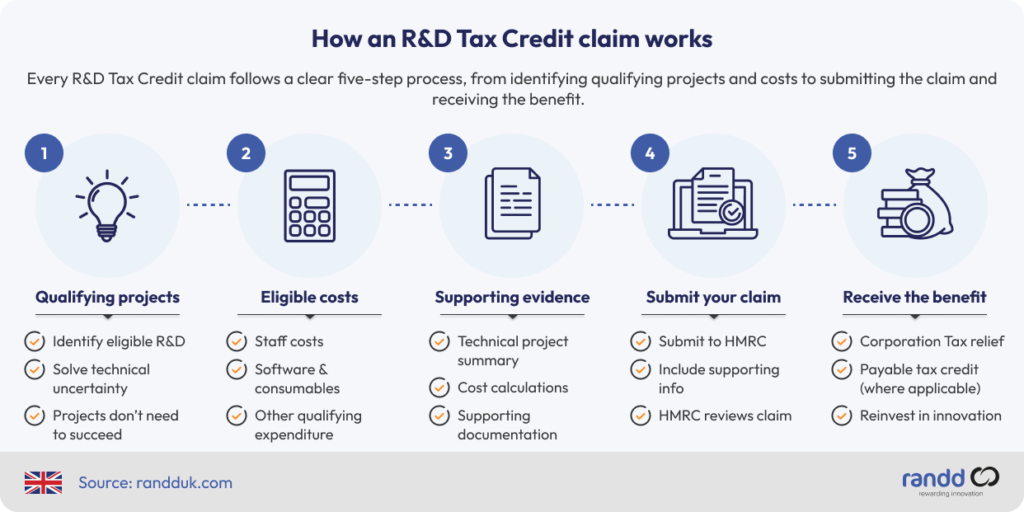
Figure 1: An overview of the typical R&D Tax Credit claims process, from identifying qualifying projects through to receiving tax relief or a payable tax credit.
Latest R&D Tax Credit Changes
The R&D Tax Relief scheme has undergone significant changes in recent years, as the government looks to simplify the system and reduce error and fraud within the claims process.
For accounting periods beginning on or after 1 April 2024, the previous SME and RDEC schemes were largely merged into a single scheme, known as the Merged Scheme. Alongside this, enhanced support remains available for qualifying R&D-intensive SMEs through the Enhanced R&D Intensive Support (ERIS) scheme.
Although the scheme has evolved, the underlying purpose hasn’t changed. The scheme continues to encourage businesses to innovate and invest in new technologies, products, and processes.
If you’re not sure whether your business qualifies, understanding the eligibility criteria is the first step. The next section explains who can claim R&D Tax Credits and what types of projects HMRC considers eligible.
Although the rules have changed, you don’t need to work out which scheme applies yourself. An R&D Tax Credit specialist can assess your business and identify the most appropriate scheme before preparing your claim.
Is it still worth claiming?
Absolutely. Although the R&D Tax Relief landscape has changed in recent years, it remains one of the most valuable forms of government support available to innovative UK businesses.
For companies investing significant time, expertise, and resources into developing products, improving processes, or solving technical challenges, the financial benefit can still be substantial.
Many businesses are surprised to discover that projects they consider part of their day-to-day operations may qualify for R&D Tax Credits. That’s why it’s often worth exploring your eligibility, even if you’re unsure whether your activities meet the criteria.
R&D Tax Credit Eligibility
One of the biggest misconceptions about R&D Tax Credits is that they’re only available to businesses carrying out groundbreaking scientific research.
In reality, R&D Tax Credit eligibility is broader than many companies realise. If your business is developing or improving a product, process, or service and has needed to overcome scientific or technological uncertainty, there may be qualifying R&D taking place.
Importantly, a project doesn’t need to be commercially successful to qualify – it’s the work involved in attempting to overcome the uncertainty that matters.
Who Qualifies?
Companies of all sizes that are subject to UK Corporation Tax may qualify for R&D Tax Relief. R&D Tax Credits aren’t limited to laboratories or technology companies, as businesses across a wide range of sectors may qualify. Ultimately, eligibility depends on the nature of the work undertaken rather than the industry you operate in. Some of the sectors we regularly support include:
- Software & IT
- Manufacturing
- Construction
- Engineering
- Food & Drink
- Agriculture & Farming
- Marine & Aviation
Ultimately, eligibility isn’t determined by your industry. What matters is whether your business is attempting to achieve an advance in science or technology while overcoming technical or scientific uncertainty.
If you’re unsure whether your business qualifies, our detailed guide explaining who is eligible for R&D Tax Credits explores the criteria in more detail.
What Counts as R&D for Tax Credit Eligibility?
For tax purposes, HMRC defines research and development as work that seeks to achieve an advance in science or technology by overcoming scientific or technological uncertainty. Importantly, the advance must contribute to knowledge or capability within the relevant field of science or technology, rather than simply representing an improvement for your business alone.
That may sound complex, but in practice it often comes down to whether your business is trying to solve a technical challenge where the solution isn’t readily available or obvious from the outset.
Qualifying activities may include:
- Developing new products, processes, or services
- Improving the performance, functionality, or efficiency of existing products
- Creating bespoke software or technical systems
- Designing new manufacturing techniques
- Testing and evaluating potential solutions
- Building prototypes and carrying out technical trials
What Projects Qualify for R&D Tax Credits?
Qualifying projects can be found in businesses of all sizes and across many different sectors.
Examples of projects that may qualify include:
- Developing innovative software functionality
- Creating more efficient manufacturing processes
- Designing specialist engineering solutions
- Reformulating food and drink products
- Improving agricultural technologies
- Developing new materials or production methods
Importantly, a project doesn’t need to be commercially successful to qualify.
Even if the project fails, is abandoned, or doesn’t achieve its intended outcome, the work could still qualify as long as genuine scientific or technological uncertainty existed throughout development.
Does Your Business Qualify?
Perhaps the easiest way to assess whether your business may qualify is to look at the challenges your team has faced during development.
If you’ve invested time, expertise, and resources into solving technical problems, improving existing technologies, or creating something that didn’t have an obvious solution from the outset, there’s a strong possibility that qualifying R&D activities have taken place.
Since every project is different, eligibility isn’t always straightforward. If you’re unsure whether your project meets HMRC’s criteria, an R&D Tax Credit specialist can assess your activities, identify qualifying projects and expenditure, and help ensure you’re not overlooking valuable claim opportunities.
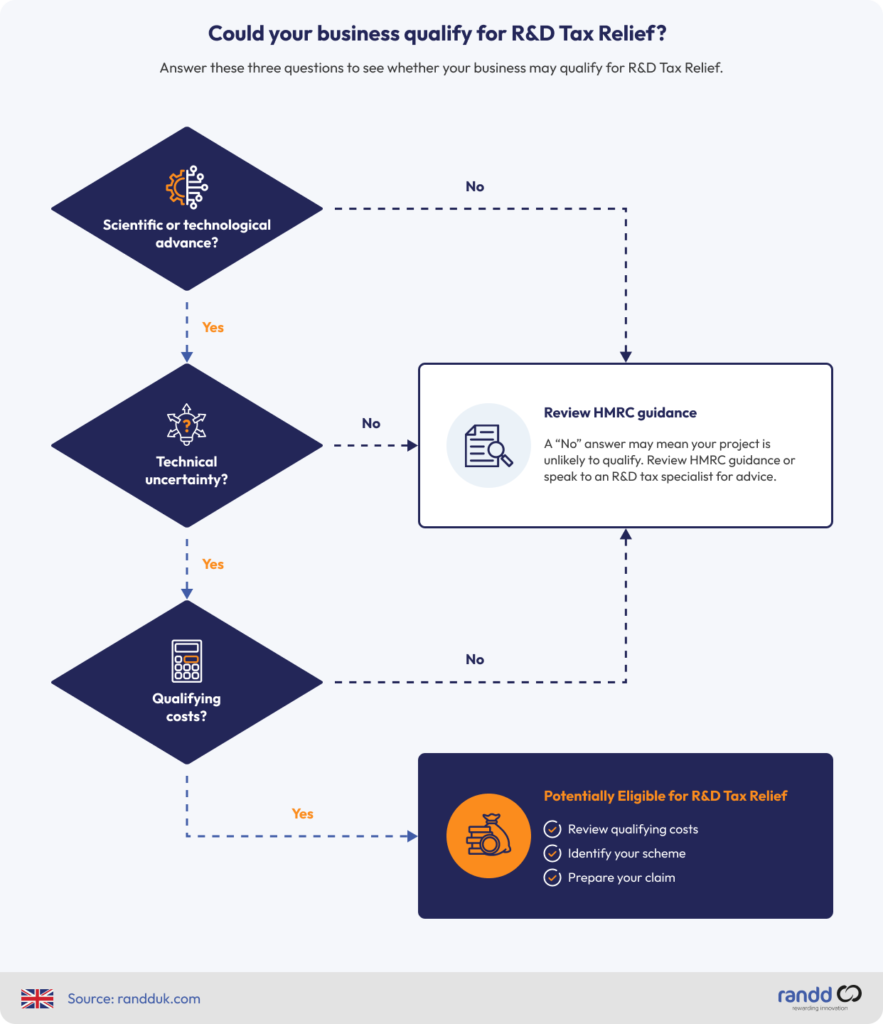
Figure 2: A high-level overview of the questions businesses should consider when assessing potential eligibility for R&D Tax Relief.
What Costs Can Be Claimed?
Once you’ve identified qualifying R&D projects, the next step is understanding which costs can be included within your claim.
Many businesses are surprised by the range of expenditure that may qualify for R&D Tax Relief. While not every project-related cost can be claimed, HMRC allows businesses to include a variety of expenses that directly support qualifying research and development activities.
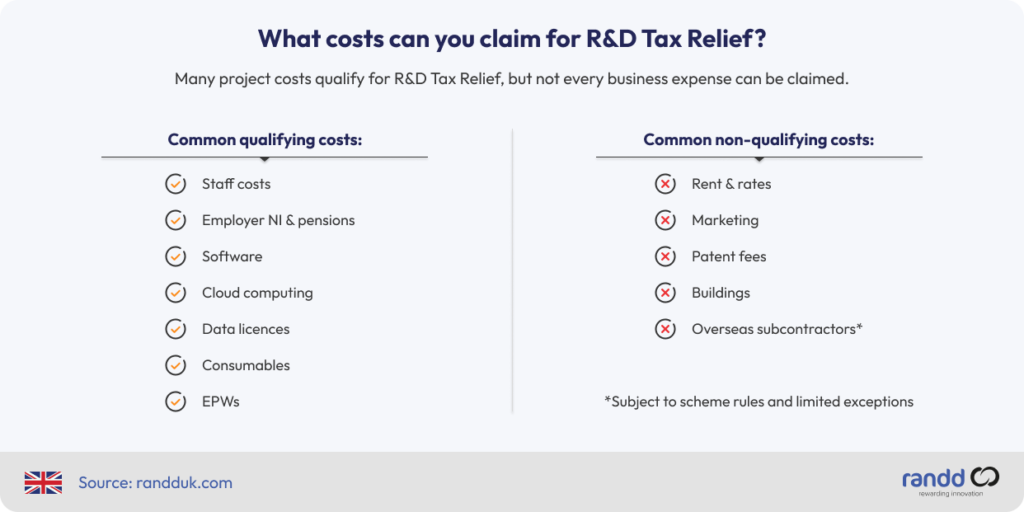
Figure 3: Examples of common qualifying and non-qualifying expenditure for R&D Tax Relief claims. Eligibility may vary depending on the applicable scheme and HMRC guidance.
Qualifying R&D Expenditure
Depending on the nature of your project, a range of costs may qualify for R&D Tax Relief. For many businesses, the largest qualifying expenses are staffing costs, including salaries, employer National Insurance contributions, and pension contributions for employees directly involved in R&D, alongside consumable items such as materials, chemicals, ingredients, fuel, power, and water used during development.
Other qualifying expenditure may include:
- Externally provided workers (EPWs)
- UK subcontractor costs (subject to the relevant scheme rules and the nature of the contractual agreement)
- Software used within qualifying R&D activities
- Data licence costs
- Cloud computing costs
- Clinical trial volunteer costs
Subcontractor costs can be more complex than other qualifying expenditure. The rules changed following the introduction of the merged R&D scheme, meaning eligibility will depend on factors such as the accounting period, the nature of the work undertaken, and the contractual arrangement.
Some costs are not eligible for R&D Tax Relief, including:
- Rent and business rates
- Marketing and advertising costs
- Patent and trademark fees
- Capital expenditure on land and buildings
- Overseas subcontractor costs (subject to limited exceptions)
Since the rules can vary depending on the accounting period and scheme involved, it’s important to ensure expenditure is assessed correctly before being included within an R&D claim.
Businesses that have received a grant or other form of funding may still be able to claim R&D Tax Relief. However, the availability of relief will depend on the accounting period, the scheme that applies, and the type of funding received. Receiving a grant does not automatically prevent an R&D claim, but its impact on your eligibility should be assessed carefully.
If you’re looking to secure grant funding alongside your R&D Tax Relief, find out more about our grant funding service.
R&D Tax Credit Schemes Explained
The R&D Tax Relief landscape has changed significantly in recent years, which can make it difficult to understand which scheme applies to your business.
The scheme available to you will largely depend on your company size, accounting period, profitability, and the amount you spend on qualifying research and development activities.
Profit-Making SMEs
Small and medium-sized businesses that undertake qualifying R&D activities may be able to benefit from valuable tax relief on their expenditure.
Depending on the accounting period in question, eligible companies may fall under either the previous SME scheme or the current Merged Scheme.
Learn more about SME R&D Tax Credits here.
Loss-Making SMEs
Loss-making businesses can still benefit from R&D Tax Relief, even if they aren’t currently paying Corporation Tax.
Depending on the scheme that applies, qualifying companies may be able to receive a payable credit, helping improve cash flow and support investment in innovation.
R&D-Intensive SMEs (ERIS Scheme)
Some SMEs may qualify for enhanced support through the Enhanced R&D Intensive Support (ERIS) scheme.
Designed for businesses with a significant proportion of expenditure dedicated to research and development activities, the scheme provides enhanced support for qualifying loss-making companies.
Learn more about the ERIS Scheme and whether your business meets the eligibility criteria in our guide.
Large Companies (RDEC Scheme)
Large businesses have traditionally claimed relief through the Research and Development Expenditure Credit (RDEC) scheme.
Although the rules have changed in recent years, some accounting periods and specific circumstances may still fall under the RDEC framework. Learn more about the RDEC Scheme and how it applies to larger businesses.
The Merged Scheme
For accounting periods beginning on or after 1 April 2024, the government introduced a new Merged Scheme, bringing together many elements of the previous SME and RDEC schemes.
The aim is to simplify the R&D Tax Relief system while continuing to reward businesses that invest in innovation.
Understanding which scheme applies to your business is important, as it can directly affect the value and structure of your claim.
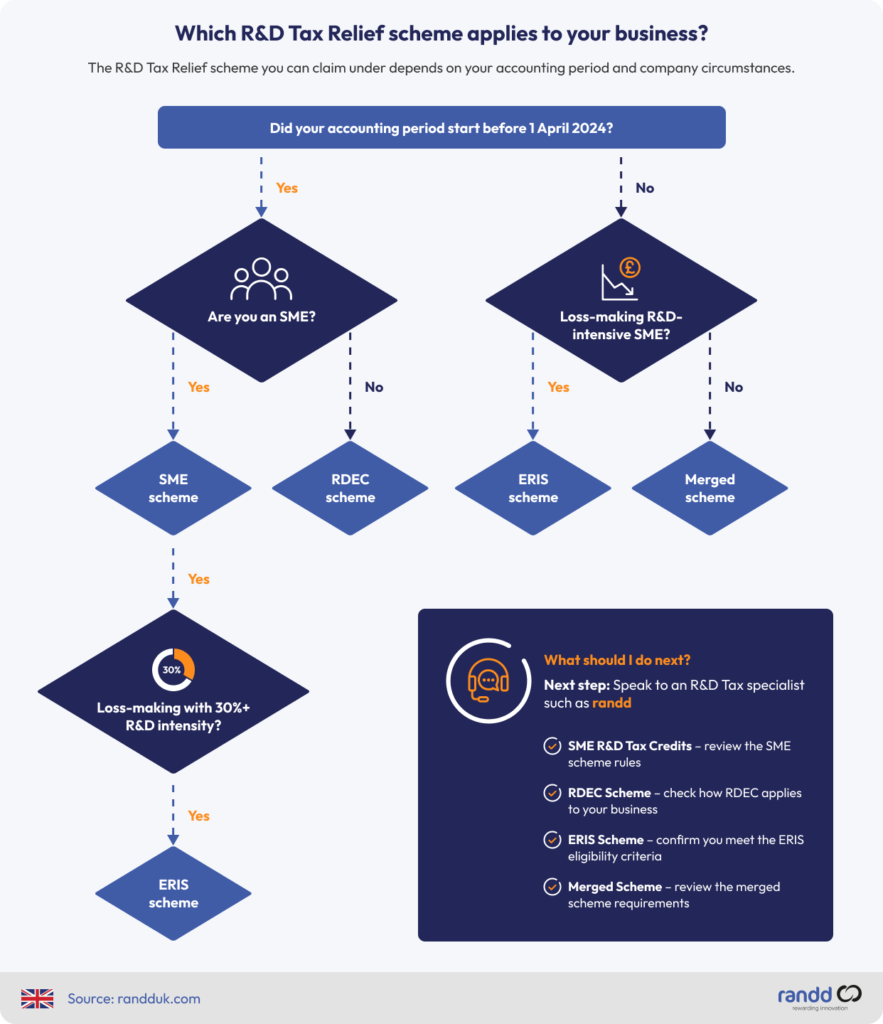
Figure 4: A simplified overview of how the main R&D Tax Relief schemes apply based on a company’s circumstances and accounting period.
How Much Are R&D Tax Credits Worth?
One of the first questions businesses ask is how much they could potentially receive from an R&D claim.
The answer depends on several factors, including:
- Your qualifying R&D expenditure
- Whether your business is profit-making or loss-making
- The accounting period being claimed
- The scheme that applies to your business
- Whether you meet the criteria for enhanced support
While every claim is different, R&D Tax Relief can provide a significant financial benefit for businesses investing in innovation.
R&D Tax Credit Rates
The value of an R&D claim depends on your qualifying expenditure, whether your business is profit-making or loss-making, and the R&D Tax Relief scheme that applies to your claim. The table below provides an overview of the current rates available under today’s R&D Tax Relief schemes.
| Business Type | Indicative Rate |
| Profit-making SMEs | Up to 15.00%, or up to 16.20% depending on your Corporation Tax position |
| Loss-making SMEs | Up to 16.20% under the Merged Scheme |
| R&D-intensive SMEs (ERIS) | Up to 26.97% |
| Large Companies | Usually up to 15.00%, or up to 16.20% depending on your Corporation Tax position |
Table 1: Indicative R&D Tax Relief rates under the current UK R&D Tax Relief schemes. Actual claim values will depend on your qualifying expenditure, Corporation Tax position, and the scheme that applies to your business.
NOTE: These figures are intended as a guide only. The actual value of your claim will depend on your qualifying expenditure, Corporation Tax position, and the scheme that applies to your business.
If you’re claiming for an earlier accounting period, previous R&D Tax Relief rates may apply.
How to Calculate R&D Tax Credits
If you’re looking for a quick estimate, our R&D Tax Credit Calculator can help you understand what your claim could be worth based on your company’s circumstances.
Calculating the value of an R&D claim isn’t always straightforward. The final amount will depend on your qualifying expenditure, your company’s tax position, the accounting period being claimed, and the scheme that applies to your business.
As a starting point, businesses should identify all eligible R&D expenditure and calculate the total value of qualifying costs incurred during the accounting period. From there, the relevant scheme rules and tax rates can be applied to estimate the potential value of the claim.
While a calculator provides a useful indication, every claim is different. For a more accurate assessment, it’s worth speaking to an R&D Tax Credit specialist who can review your qualifying projects and expenditure.
R&D Tax Credit Deadlines & Timelines
Understanding the deadlines involved in the R&D claim process is important, as claims submitted outside the allowable time limits may no longer be eligible for relief.
Do you need to notify HMRC before making a claim?
First-time claimants and certain businesses that haven’t made a recent R&D claim may need to notify HMRC in advance by submitting a claim notification form. Where required, this must be submitted within six months of the end of the relevant period of account, so it’s important to check whether the requirement applies before the deadline.
How often can you claim R&D Tax Credits?
Businesses typically make one R&D claim for each accounting period, usually as part of their Corporation Tax return. If necessary, claims can generally be amended or resubmitted before the relevant HMRC deadline.
It’s also possible to claim for previous accounting periods, provided they fall within HMRC’s time limits.
In most cases, businesses can claim for the previous two accounting periods. This means that companies which have overlooked qualifying projects in the past may still be able to recover valuable R&D Tax Relief.
How long does it take to receive R&D Tax Credits?
The complexity of a claim and current HMRC workloads can affect processing times.
Processing times can vary depending on the information provided and whether HMRC needs to carry out any additional checks or request further information before processing the claim.
While many claims are processed within a matter of weeks, more complex claims or those selected for further review may take longer.
The Benefits of R&D Tax Credits
R&D Tax Credits offer far more than a simple tax saving.
By helping businesses recover a proportion of their research and development costs, the scheme provides additional resources that can be reinvested into future growth and innovation.
Adding Value to Your Business
R&D Tax Relief can help businesses:
- Improve cash flow
- Invest in future innovation
- Recruit and retain skilled employees
- Purchase equipment and technology
- Bring new products and services to market more quickly
- Reduce the financial risks associated with research and development
For many businesses, R&D Tax Credits provide accessible funding without the need for loans, grants, and external investment.
Avoiding Common Mistakes & HMRC Enquiries
Preparing an R&D claim can be complex, even if you’ve done so before, particularly as the rules and requirements continue to evolve.
Common mistakes include:
- Including non-qualifying projects
- Overclaiming expenditure
- Failing to provide sufficient technical evidence
- Misinterpreting HMRC guidance
- Missing eligible costs that could increase the value of the claim
Errors like the above can increase the likelihood of HMRC requesting additional information or opening an enquiry into a claim, so understanding the common pitfalls can help reduce risk and improve the quality of your claim.
Taking the time to properly assess projects, document technical challenges, and calculate qualifying expenditure can help ensure claims are accurate, compliant, and fully supported.
Working with an experienced R&D tax adviser can also provide additional confidence that your claim is robust, accurate, and aligned with HMRC requirements.
How to Claim R&D Tax Credits
A successful R&D Tax Credits claim relies on more than simply identifying qualifying projects. Businesses must also provide supporting information that demonstrates why the work qualifies and how eligible expenditure has been calculated.
What Documentation Do You Need to Claim?
The exact requirements will vary depending on your project and the industry you work in, but supporting documentation often includes:
- Project descriptions and technical reports
- Details of the scientific or technological challenges faced
- Financial records and cost breakdowns
- Payroll information
- Contractor and supplier invoices
- Supporting calculations and working papers
Maintaining accurate records throughout a project can make the claims process significantly easier and help support your position if HMRC requests further information.
Can you claim without a professional?
Yes, businesses are legally able to prepare and submit R&D claims themselves, or through their accountant, provided they have a clear understanding of the eligibility criteria and scheme requirements.
However, the legislation can be complex, particularly where projects involve multiple activities, subcontractors, or significant expenditure.
When to use a Specialist
Many businesses choose to work with an R&D Tax Credit specialist when they want additional confidence that their claim is accurate, compliant, and fully optimised.
A specialist can help identify qualifying activities, calculate eligible expenditure, prepare supporting technical documentation, and manage the submission process on your behalf.
At randd, our dedicated team of R&D specialists has helped businesses across a wide range of industries secure valuable tax relief while minimising risk and maximising claim value. As of 2026, our HMRC enquiry rate is 3%, compared with an industry average of 20%.
Ready to find out what your claim could be worth?
Use our R&D Tax Credit calculator for an instant estimate, or get in touch with one of our specialists for tailored advice on your eligibility and potential claim value.
This guide has been reviewed by our Technical Director Adam Bointon to ensure the information is technically accurate and aligned with current HMRC guidance and R&D Tax Relief legislation.

Chloe Twist is a content specialist at randd, creating informative resources on R&D Tax Relief, claim eligibility, and industry developments. She focuses on helping businesses and accountants better understand the R&D tax process, compliance requirements, and the latest changes affecting innovation-focused companies.

Sign up to our Newsletter
Stay ahead with the latest R&D tax insights, funding updates, and innovation trends - straight to your inbox.