From Laboratory R&D to Whole-System Recognition
- Years of Partnership: 15
- HMRC challenges: None to date
The Client
Our client is a UK-based agricultural business specialising in animal nutrition, developing feed formulations to optimise animal health, growth, and performance.
The business employed a dedicated technical function, with laboratory-based work focused on refining feed compositions. This activity was recognised internally as R&D.
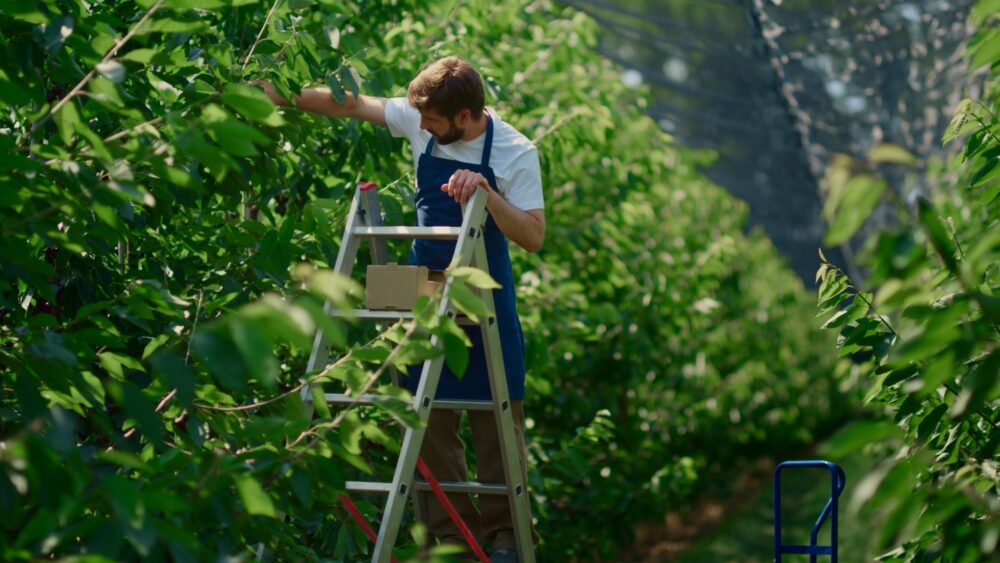
However, much of the innovation extended beyond the lab—into real-world application, where formulations were tested across varying environmental and biological conditions.
The Challenge
The issue was not a lack of innovation. It was where that innovation was believed to exist.
R&D was primarily associated with laboratory work—controlled testing and formulation development. This “white coat” activity was treated as the core of qualifying work.
In reality, significant uncertainty emerged beyond the lab. As formulations were deployed in live environments, variables such as environmental conditions, biological response, and performance variability required ongoing experimentation and refinement.
Despite this, field-based work was often treated as routine operations rather than qualifying R&D.
As a result, a substantial portion of genuine R&D activity remained unrecognised.
Our Approach
We expanded the definition of R&D beyond the laboratory to reflect the full lifecycle of product development.
We validated the existing laboratory work, then examined how formulations performed in real-world
conditions.
Working with technical and operational teams, we identified where uncertainty persisted beyond initial
formulation, including:
● Performance variation in live environments
● Biological response across different conditions
● Iterative refinement based on field outcomes
This reframed field-based activity as a continuation of experimental work rather than routine deployment.
We then aligned laboratory and field activity within a single R&D framework, supported by a detailed
review of associated costs.
The science did not stop at the lab bench.
The R&D claim shouldn’t either.
The Result
The business was able to capture a significantly broader range of qualifying activity across both laboratory and field-based work.
What had been treated as a narrow, lab-contained function became a fully integrated view of innovation.
The process also became more efficient. Technical teams were no longer required to separate “R&D” from “operations” or reconstruct activity retrospectively.
All submissions were prepared to withstand scrutiny from the outset, and none have been challenged.
Strategic Impact
Over time, this approach became embedded within the business, resulting in a long-term partnership spanning 15 years.
The company developed a clearer understanding of how innovation flows from laboratory development through to real-world application, and how both stages contribute to resolving uncertainty.
By structuring R&D in line with how the business actually operates, the client maintains a consistent, defensible position while capturing the full extent of legitimate activity.
R&D did not sit in one place.
It began in the lab.
But it was proven—and refined—in the field.
If your team is spending too much time supporting your R&D claim, we should talk.

Sign up to our Newsletter
Stay ahead with the latest R&D tax insights, funding updates, and innovation trends - straight to your inbox.